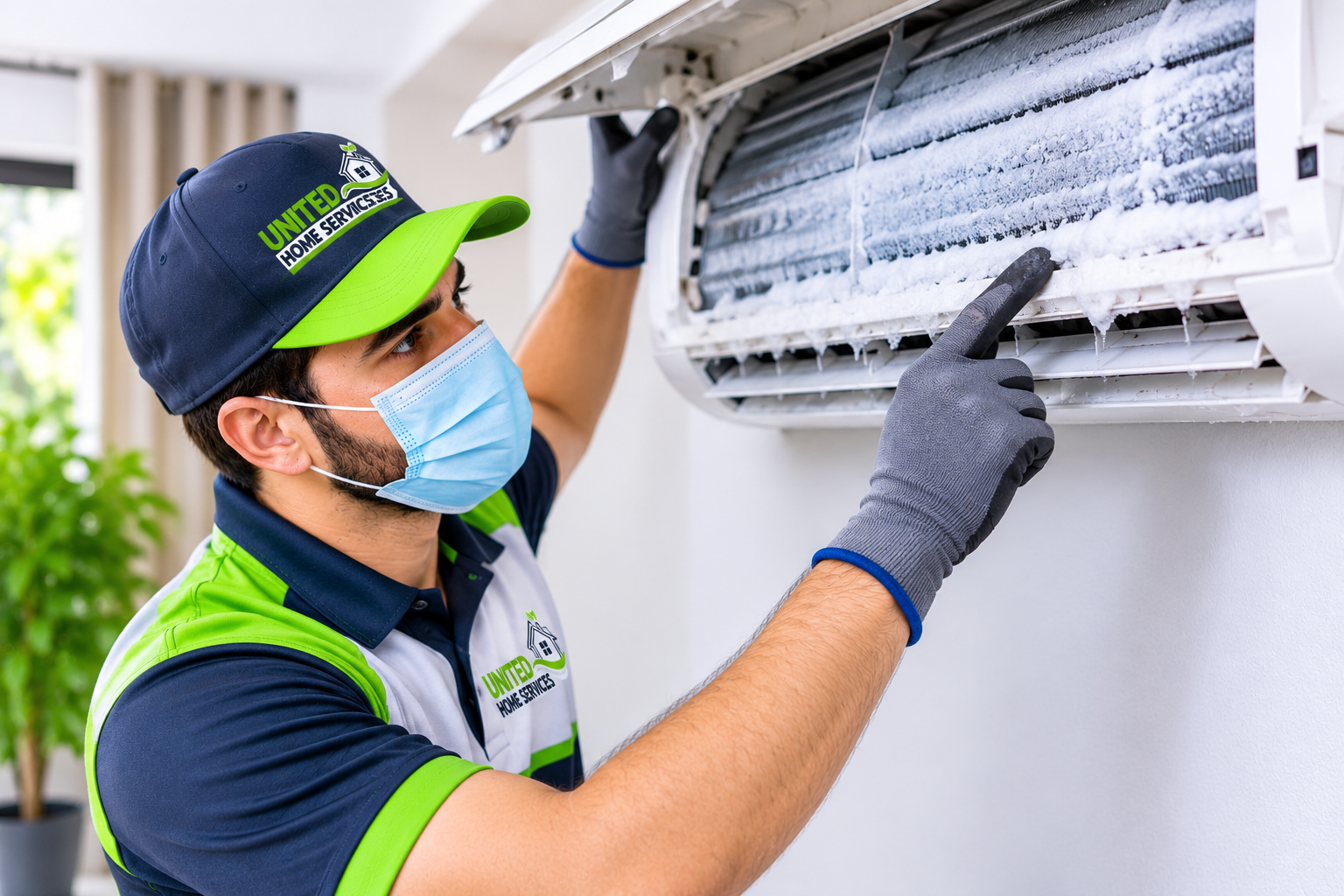

It sounds strange, but a frozen air conditioner is a common summer problem in Houston. You step outside into thick, sticky heat, then find ice on your indoor unit or refrigerant line and warm air coming from your vents. At United Home Services, we help Houston homeowners understand what is happening inside their cooling systems. This guide explains why an AC freezes up in humid weather, how to spot the warning signs, what to do right away, and how to keep it from happening again.
How Can an AC Freeze When It Is Hot Outside?
Your air conditioner cools your home by passing warm indoor air over the evaporator coil, which is filled with cold refrigerant. The coil normally stays cold but above freezing. As air passes over it, heat and moisture are removed, and the water drips into a drain pan.
Problems start when the coil gets too cold or does not receive enough warm air. Its surface temperature drops below freezing, and the moisture that would normally drip away turns to frost. Because Houston air carries so much humidity, there is plenty of water available to build a thick layer of ice. Once ice forms, it blocks even more airflow, and the problem feeds on itself.
Common Causes of a Frozen AC in Houston
1. Dirty or Clogged Air Filter
A dirty filter is the most common cause. It restricts airflow across the coil, so the coil gets colder than it should. In Houston, where air conditioners run for much of the year, filters clog quickly.
2. Blocked or Closed Vents and Returns
Closing vents in unused rooms, or blocking returns with furniture or rugs, cuts airflow through the system. Less warm air reaches the coil, and it can freeze.
3. Dirty Evaporator Coil
Dust and grime act like insulation on the coil. They prevent proper heat transfer and can cause cold spots where ice begins to form.
4. Low Refrigerant
Refrigerant does not get used up, so low levels almost always mean a leak. Low pressure makes the coil colder than it should be, and ice follows. Refrigerant leaks need professional repair.
5. Duct Problems
Crushed, disconnected, or heavily leaking ducts reduce the airflow your system depends on. Dirt buildup inside ducts can add to the restriction. A system that cannot move air properly is more likely to freeze.
6. Failing Blower Motor
If the blower runs slowly or stops working, not enough air crosses the coil. You may notice weak airflow even before ice appears.
7. Thermostat Set Too Low or Cool Nights
Setting the thermostat very low forces the system to run constantly. In spring and fall, Houston nights can cool off while humidity stays high, and running the AC in those conditions can also lead to freezing.
Warning Signs Your AC Is Freezing Up
- Ice or frost on the indoor coil, refrigerant line, or outdoor unit
- Weak airflow from vents
- Warm or lukewarm air when the system runs
- Water leaking around the indoor unit as ice melts
- Hissing or bubbling sounds, which can point to a refrigerant leak
- Rooms that are humid and uncomfortable even with the AC on
What to Do If Your AC Freezes
- Turn off the cooling. Set the thermostat to “off” so the compressor stops adding cold.
- Turn the fan on. Running only the fan pushes warm indoor air across the coil and helps it thaw.
- Do not chip or scrape the ice. You can damage the coil or refrigerant lines.
- Check the filter. Replace it if it is dirty.
- Open vents and clear returns. Make sure air can move freely.
- Be patient. Thawing can take several hours, and sometimes a full day.
- Watch for water. Melting ice can overflow the drain pan, so place towels or a container under the unit if needed.
After the system has fully thawed, restart it and watch for ice. If it freezes again, the cause is probably more than a dirty filter, and it is time to call a professional.
When to Call a Professional
Call a technician if:
- The coil freezes again after thawing
- You suspect a refrigerant leak
- Airflow is weak even with a clean filter
- You see water damage or the drain line is clogged
- Your home stays humid despite a working system
Homeowners should never add refrigerant themselves, because handling it requires proper training and certification. If airflow seems low throughout the house, a professional air duct inspection can reveal crushed ducts, disconnected sections, or heavy buildup that make the system more likely to freeze.
How to Prevent AC Freezing in Houston
- Change filters regularly, often monthly during heavy summer use
- Keep all supply vents open and returns clear
- Schedule annual AC maintenance before the cooling season
- Keep the thermostat at a reasonable setting instead of the lowest possible temperature
- Have ducts inspected for leaks, damage, and buildup
- Keep indoor humidity under control with proper ventilation and correct system sizing
- Keep the outdoor unit clean and clear of debris
Final Thoughts
An AC that freezes up is almost always telling you that airflow or refrigerant levels are off. In Houston’s humid weather, even a small restriction can quickly turn into a block of ice. By changing filters, keeping air moving, and catching problems early, you can protect your system and stay comfortable all summer. When the cause is not obvious, professional help saves time and prevents costly damage.